PI Apparel 2026 showed that AI, connected product data, and Digital Product Creation are reshaping fashion product development.
PI Apparel returned to New York on July 28 and 29, bringing together fashion brands, technology providers, educators, consultants, and digital product leaders to discuss the future of fashion product development.
Across two days of presentations, workshops, panel discussions, and think tanks, one message stood out. Digital Product Creation (DPC) is entering a new stage of maturity. The conversation has moved beyond adopting individual technologies. Brands are now focused on connecting AI, product data, people, and business processes into a single, scalable product development strategy.
The discussions reinforced an important shift. AI, 3D, Product Lifecycle Management (PLM), and supplier collaboration are no longer separate initiatives. Together, they are becoming the foundation for faster, smarter, and more connected product development.
AI Is Becoming Part of Everyday Product Development
Artificial intelligence was one of the strongest themes throughout the conference.
Rather than debating whether AI belongs in fashion, speakers focused on how brands can apply it to real business challenges. Sessions explored how AI can support creative development, generate product content, accelerate approvals, improve decision making, and reduce repetitive work across the product lifecycle.
Agentic AI also emerged as a major topic. Instead of completing isolated tasks, connected AI agents are beginning to support multiple stages of product development. From creating product information to validating specifications, coordinating approvals, and assisting downstream sourcing activities, AI is becoming an active participant in everyday workflows.
The opportunity is significant, but so is the challenge. AI can only deliver reliable results when it has access to accurate, structured, and connected product information. Without a strong data foundation, automation simply creates faster inconsistencies.
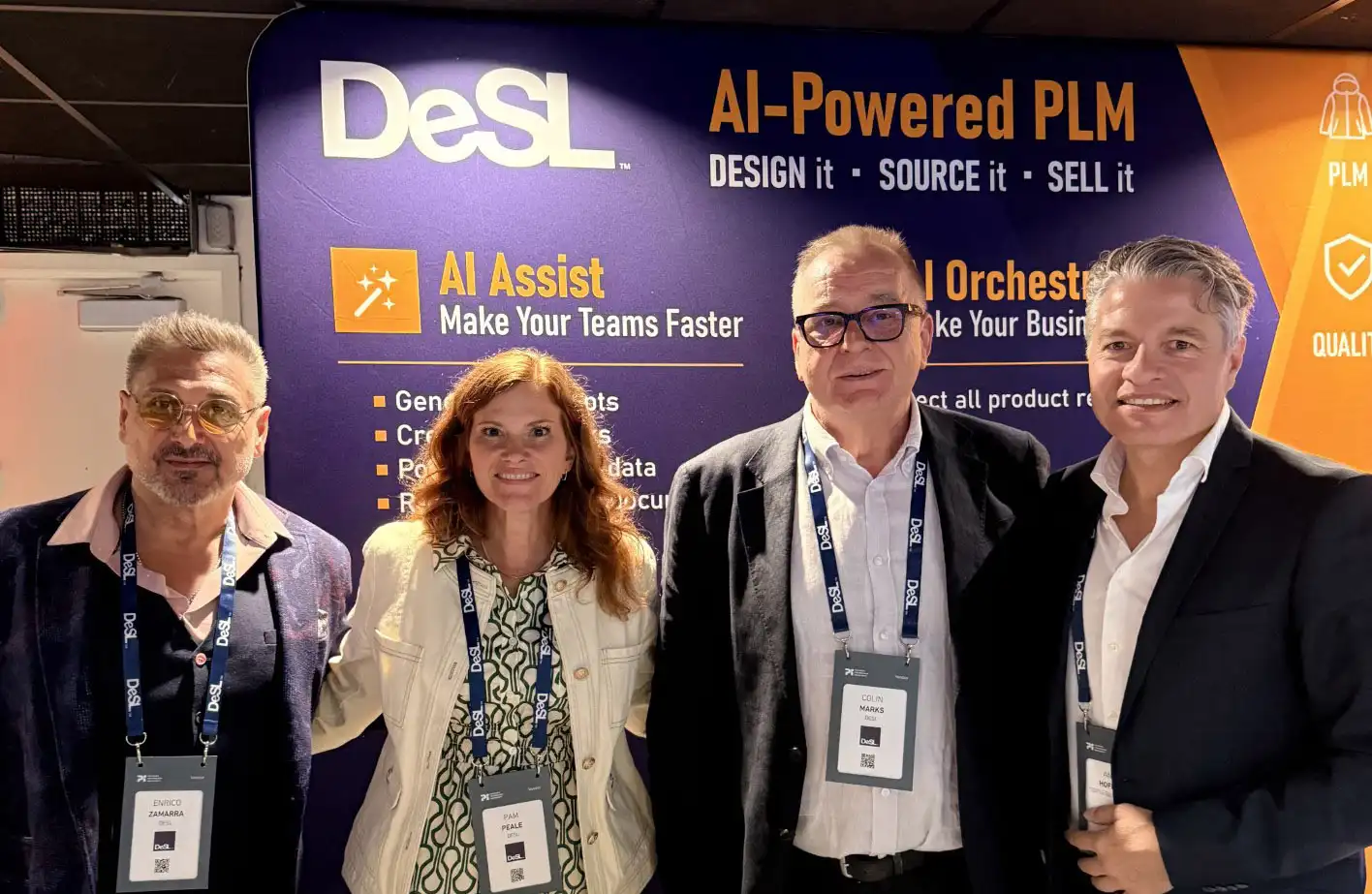
Enrico Zamarra, Pam Peale, and Colin Marks from DeSL, along with TSG's CEO Anton Hofmeier
Digital Product Creation Is Driving Business Transformation
Presentations from companies including H&M, Gap, JD Sports, Under Armour, Perry Ellis, and Varsity Spirit demonstrated how Digital Product Creation has evolved.
The conversation was no longer centered on creating better 3D assets. Instead, brands discussed how DPC connects design, development, sourcing, merchandising, and supplier collaboration into a unified way of working.
Several sessions examined why Digital Product Creation initiatives sometimes struggle to deliver expected results. Technology is rarely the primary obstacle. Success depends on executive sponsorship, clearly defined ownership, standardized processes, effective change management, and measurable business outcomes.
This reflects an important reality for fashion brands. Digital Product Creation is not simply a technology project. It is an organizational transformation that changes how teams collaborate throughout product development.
Speed Requires Strong Governance
Fashion brands continue to face pressure to shorten development cycles, reduce physical samples, improve collaboration, and respond faster to changing consumer demand.
AI, automation, and Digital Product Creation provide powerful tools to accelerate these processes. However, they also introduce new responsibilities.
Who validates AI generated content? Who owns the final product decision? How should brands protect intellectual property? What governance is required as regulations continue to evolve? How can companies move faster without compromising quality, accountability, or human expertise?
PI Apparel made one point increasingly clear. Governance cannot be treated as an afterthought. It must be designed into Digital Product Creation strategies from the beginning, ensuring AI supports people rather than replacing critical decision making.
Connected Product Data Powers AI and PLM
Although emerging technologies dominated many presentations, the underlying challenge remained familiar.
Many organizations still struggle with fragmented product information, disconnected systems, and inconsistent data spread across multiple departments.
Sessions covering PLM, digital asset management, 3D material standards, supply chain interoperability, and product information management all reinforced the same conclusion.
Connected product data is the foundation that enables Digital Product Creation.
AI, 3D applications, and workflow automation perform best when they operate within a connected Product Lifecycle Management platform. A modern PLM solution provides a single source of truth for product information, establishes standardized workflows, maintains version control, and gives every stakeholder access to reliable data throughout the product lifecycle.
Without that foundation, even the most advanced AI capabilities cannot consistently deliver accurate or trustworthy results.
What Comes Next for Digital Product Creation?
PI Apparel 2026 demonstrated that the fashion industry is entering a new phase of digital maturity.
The conversation has shifted from isolated technology investments to connected business processes. Brands are looking beyond individual AI tools and 3D applications. They are building integrated environments where product data, AI, suppliers, workflows, and business systems operate together.
For DeSL, this reinforces a principle that has guided our product strategy for years. AI creates the greatest business value when it is embedded within connected Product Lifecycle Management workflows, not layered onto disconnected systems. When product data, supplier collaboration, approvals, compliance, and development processes all work from a single digital foundation, brands can automate routine work, improve collaboration, accelerate product development, and make more informed decisions.
The future of Digital Product Creation will not be defined by any single technology. It will be defined by how effectively fashion brands connect their people, processes, product data, and intelligent tools across the entire product lifecycle.
-
How Digital Transformation is Fundamentally Changing the Fashion Industry
In the form of an internal Q&A, DeSL has provided their answers to some burning questions on the topic.
November 26, 2020 -
Defining End-to-End Digital Product Creation
Learn how end-to-end digital product creation transforms fashion workflows. DeSL’s PLM solutions connect design, sourcing, costing, and critical path tracking...
September 23, 2025 -
Preparing for PLM: A Fashion Brand Guide
Learn steps for system preparation, data cleanup, integration planning, and building the right rollout strategy.
September 30, 2025