Govern It. Evidence It. Publish It.
DeSL’s Digital Product Passport software creates, governs, and publishes Digital Product Passports for fashion, apparel, and footwear brands. Every passport is generated from the product, supplier, quality, and certification records you already manage in the platform, so what a consumer or a regulator sees is current and backed by evidence.
The QR code is only the access point. The value sits in the governed data behind it, which is why DeSL builds the passport on native PLM rather than a separate repository. The Digital Product Passport module works alongside DeSL PLM, Total Quality Management, Supplier Relationship Management, and Product Information Management, or as a standalone solution.

DPP Software for Fashion, Apparel & Footwear
Three disciplines sit behind every passport DeSL publishes.
Product, supplier and certification data governed in one platform, with PLM at its core
Everyday commercial documents read by AI and checked against your records
Role-appropriate passports generated on demand, never stored as static copies
Key Features of DeSL's DPP Software
The passport draws directly on DeSL PLM: styles, SKUs, bills of materials, composition, specifications, colourways, imagery, and care and repair information. Version control, approval workflows, and full audit history apply to every field, so each published passport traces back to an approved record rather than a copied one.
Suppliers submit declarations, factory details, and supporting documents through a controlled portal. Submissions pass through validation workflows before anything reaches a passport, which keeps unverified data out of published records.
Inspections, laboratory results, and corrective actions link directly to products. GOTS, GRS, OEKO-TEX, transaction certificates, and certificates of origin are managed natively, with validity checked batch by batch rather than assumed across a whole style.
DeSL reads the commercial documents you already exchange: invoices, purchase orders, bills of lading, laboratory reports, and certificates. It matches them against your product and supplier records, compares them to the bill of materials and order, and flags exceptions. This is how the platform builds an evidence-based chain of custody beyond Tier 1, and how it separates verified information from declared, inferred, incomplete, conflicting, or expired.
A single style can require several passports. DeSL generates them at the level the product actually varies: by supplier, bill of materials, colorway, size, or production batch. That is the join between the PLM product definition and the ERP production record, and it is where publish-only tools stop.
Passports are assembled at the point of access. Consumers, regulators, service partners, recyclers, and internal teams each see the view appropriate to their role, delivered through QR codes, web portals, mobile apps, retail systems, and open APIs. Authentication, access control, and audit history apply throughout.
Download White Paper
For the full picture of what ESPR will require, why product information is hard to trust today, and how to prepare, download our white paper.
It covers the regulatory timeline, the data foundations a passport depends on, the Govern it, Evidence it, Publish it framework, and a phased roadmap. Written for brand leadership, sourcing and supply-chain managers, product designers, and IT and data teams.
Complete the form below to download.
Why Choose DeSL's Digital Product Passport?
DeSL builds every passport on native PLM, where your product definition already lives. ERP records what was ordered and made; PLM records what the product is. Most DPP tools only publish, depending on an external PLM and a separate repository, so their passports are only as good as the last export. DeSL removes that layer and the data drift that comes with it.
Regulators are finding data errors, not printing errors. A 2026 European Commission campaign found 37% of garments carried incorrect fibre-composition labels, rising to 64% for natural and synthetic blends. DeSL governs composition at bill of materials level and validates certificates batch by batch, where that error originates.
Because DeSL governs the data your teams already use, the records that satisfy a regulator also improve product development, sourcing, and supplier collaboration. Compliance becomes a by-product of running product information well.
Publishing a Passport vs Governing the Truth
Built for ESPR, Ready Before the Deadlines
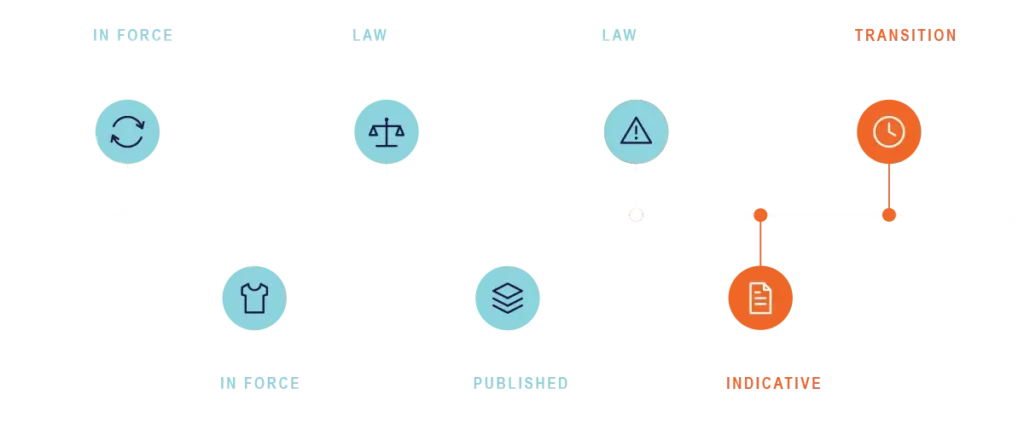
ESPR entered into force in July 2024. The textile delegated act is expected around 2027, and detailed requirements are still being written.
Because DeSL generates passports rather than storing them, adapting to a new required field, a new certificate type, or a new data carrier is a configuration change, not a re-implementation. You can start strengthening the data now and stay ready as the rules firm up.
Seamless Integration & Scalability
DeSL’s open APIs connect to ERP, e-commerce, warehouse, retail, and sustainability platforms, so your existing investments are preserved rather than replaced. The cloud platform supports real-time collaboration across internal teams, vendors, and suppliers worldwide.
DeSL scales with you. Start with the modules you need now and add others as requirements grow. Brands already running DeSL PLM, Total Quality Management, or Supplier Relationship Management have much of the passport foundation in place, which shortens the path considerably.
DeSL is part of Textile Solutions Group, which connects PLM, ERP, MES and CAD across the textile value chain. Brands that also own or work closely with manufacturing can see how passport readiness extends beyond product development across the TSG ecosystem.
Getting Started with DeSL's DPP Software
DeSL supports a phased implementation, so progress is measurable well before requirements are final.
Discover DeSL's Digital Product Passport Software
- Unified product information platform, not a standalone DPP repository
- Native PLM as the foundation, not a dependency on an external system
- Native supplier, quality and certification management
- AI-powered document intelligence for evidence-based chain of custody
- Open integration with existing ERP investments
- Built to adapt as regulation continues to evolve
DeSL is a market leader in digital transformation for the retail, fashion, apparel, and footwear industries. The DeSL DPP Platform builds passports from the information you already manage, turning a compliance obligation into a lasting advantage.
Request a demo to see how DeSL governs, evidences, and publishes Digital Product Passports from your own product data.
DISCLAIMER: General information about Digital Product Passports and ESPR; not legal or regulatory advice. Requirements and dates remain subject to change.